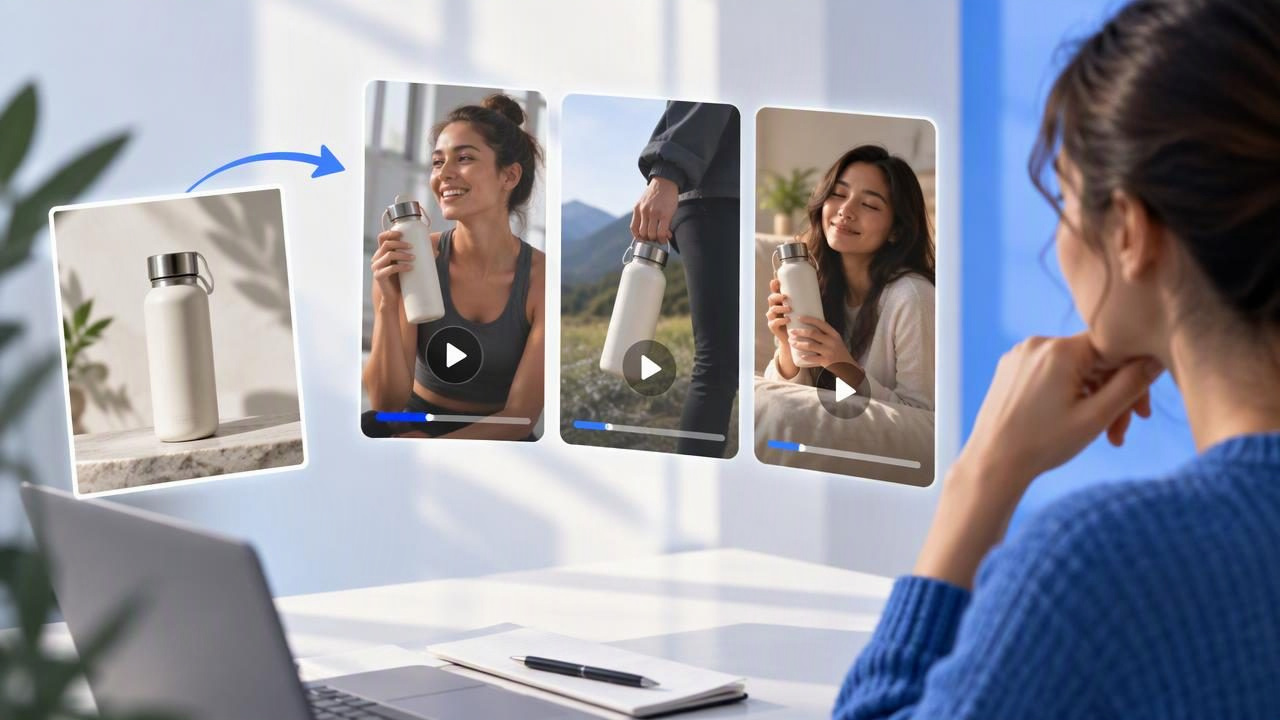
A clear product photo can be the starting point for several distinct video ad ideas—not just a moving version of the same image. For Shopify merchants, AI video ads can help explore creator-style storytelling, demonstrate a use case, or test different opening hooks before investing more time in production.
The important distinction is between a creative concept and a verified product result. An AI-generated video may help you visualize a potential ad, but it does not prove that the product performs as shown, that a person genuinely used it, or that the concept will improve sales. Treat the output as creative material to review, not evidence or a customer testimonial.
This guide shows how to use one product image to prepare and compare UGC-style video concepts, using a clearly hypothetical Shopify example. It also explains what a still photo cannot tell an AI system and how to review drafts responsibly.
What a product photo can—and cannot—do
A product photo can provide visual reference for features that are visible: the item’s shape, color, packaging, label, and arrangement. A clean, well-lit image with the whole product in frame gives you a more useful starting point than a cropped, blurry, or cluttered picture. If a detail matters to the ad, make sure it is visible in the source image rather than expecting a video tool to infer it accurately.
A single image does not establish how a product works, feels, fits, tastes, or performs. It may not show its scale, all sides, moving parts, or the correct way to use it. AI-generated motion can fill visual gaps creatively, but that can also produce inaccurate details. Use product specifications and your own approved materials to guide the script, then inspect every frame against the actual item.
Before drafting concepts, write down three things: the product facts you can substantiate, the audience you want to address, and the action you want viewers to take. This short brief keeps the video idea connected to the real offer rather than letting a visually interesting scene invent its own claims.
Example: one reusable bottle, three ad directions
Imagine a Shopify store selling a reusable water bottle. The merchant has a front-facing product image showing its color, lid, and label. The examples below are creative directions only; they are not generated video results, customer experiences, or claims about a real bottle. Before using any version, the merchant would need to check that its statements and visuals match the actual product.
- Everyday carry hook: Open with a creator-style line such as, “What I pack for a long day out.” Show the bottle beside ordinary bag items, then introduce the visible design. This concept sells a routine and context, not an unverified performance benefit.
- Feature-focused explanation: Start with, “Here are the details I checked before choosing a bottle.” Use close framing to call attention to the lid and color visible in the source image. Only describe features confirmed by the product listing or other reliable product information; do not imply leak resistance or temperature retention unless those claims are supported.
- Gift-selection angle: Frame the video as a shopper considering a practical gift. The opening might be, “Looking for a useful gift for someone who brings lunch?” The rest can show the product and explain confirmed options, such as available colors, if accurate. Do not present an invented person’s enthusiasm as a real buyer review.
These concepts differ in their hook, setting, and reason to care. That makes them more informative to compare than three drafts with only slightly different wording. The source photo anchors product appearance; the written brief supplies the intended message; review determines whether the final visual stays truthful.
How to compare AI video ad concepts
Compare drafts against the same brief instead of judging only which one looks most polished. A consistent review makes it easier to spot differences in message and identify problems before a draft is used in a campaign. If you are working from just one image, keep a close eye on details that the image cannot verify.
| Review area | What to ask | Warning sign |
|---|---|---|
| Opening hook | Does the first line quickly establish a relevant situation or question? | A dramatic promise that the product information does not support. |
| Product accuracy | Do color, shape, label, and visible components match the real item? | Distorted packaging, changed logos, or invented parts. |
| Demonstration | Can each action be performed with the actual product? | Impossible movement or an unverified use claim. |
| Creator-style framing | Does the delivery feel conversational without pretending to be a real review? | Fabricated personal experience, endorsement, or customer result. |
| Shopper clarity | Can a viewer understand what the item is and what to do next? | Atmosphere takes attention away from the product or offer. |
One practical method is to score each area from one to five, with a separate pass/fail check for factual accuracy. A high creative score cannot compensate for a false claim or visibly incorrect product detail. Keep notes about why a concept is stronger, rather than relying on a vague impression that it “feels more engaging.”
For example, the everyday-carry idea may have the clearest audience context, while the feature-focused idea may make the product easiest to recognize. The gift angle may be worth exploring around seasonal shopping, but it should not be chosen merely because it looks warm or polished. These are judgments about the creative drafts, not predictions of sales outcomes.
Turn comparisons into a useful test
If you decide to test concepts in paid or organic social content, change one major creative variable at a time where practical. You might hold the product, offer, audience, and placement steady while comparing two different hooks. If you change the hook, setting, script, and product presentation simultaneously, it becomes harder to understand what contributed to any difference in response.
Define what you want to learn before publishing. For instance, are you checking whether shoppers respond more to an everyday routine or a feature explanation? Choose a relevant measure for that question, establish a consistent observation period, and record other changes that could affect the comparison. Results can vary with audience, distribution, timing, and offer; a small test does not establish a universal rule.
Keep the interpretation modest. A concept that receives more views in one test has not necessarily driven more purchases, and an early engagement signal does not prove that the product claim is persuasive or accurate. Use test observations to guide the next creative decision, then validate important business conclusions with appropriate store and campaign data.
Limitations and responsible use
- Still-image limitations: A photograph gives limited information about dimensions, texture, function, and appearance from other angles. Supply accurate product details and compare generated frames with real reference materials.
- Invented motion: A generated hand, prop, or product action may look plausible but be physically wrong. Review the entire clip, not only its opening frame, and remove or replace misleading moments.
- Claims and testimonials: Do not turn fictional dialogue into a supposed customer account, expert endorsement, or verified outcome. If a creator or actor is involved, represent their role honestly and follow applicable advertising disclosure requirements.
- Brand and label fidelity: Text, packaging, and logos can be altered or rendered unclearly. Check spelling and brand presentation at the size viewers will see, and use approved artwork when needed.
- Rights and consent: Confirm that you have permission to use the source image, music, likenesses, and other creative assets. Requirements depend on the material and where the ad will appear.
- Platform and policy review: Check current advertising rules, format specifications, and disclosure expectations for each destination. Do not assume that a draft is compliant simply because it can be created.
These checks matter especially when the product relates to health, safety, finance, or another regulated area. A concept that implies a measurable benefit needs appropriate substantiation; an attractive visual is not proof. When a claim cannot be supported, revise the script and scene rather than relying on a disclaimer to fix a misleading impression.
A simple decision checklist
Before selecting a concept, ask:
- Is the product recognizably accurate in every relevant scene?
- Can I substantiate each spoken or on-screen claim?
- Is the creator-style presentation clearly creative rather than a fabricated real customer endorsement?
- Does the concept communicate one main reason a shopper might consider the product?
- Can I compare it fairly with another draft using a clear question and consistent conditions?
If a draft fails an accuracy check, fix or discard it before considering its creative strengths. If it passes, choose the direction that best fits the product facts, audience, and test objective—not the one that makes the boldest promise.
Make the product photo a starting point, not proof
AI video ads for Shopify products can make it easier to explore different visual storytelling approaches from a product image. The strongest use is structured comparison: develop distinct hooks, check each draft against product facts, and test only what you can interpret responsibly. Keep the distinction between an imagined ad concept and actual product performance clear at every stage.
For a practical explanation of turning a product image into video, see UGCMade’s product photo-to-video guide. Whatever workflow you choose, careful review is what keeps creative experimentation connected to the real product.