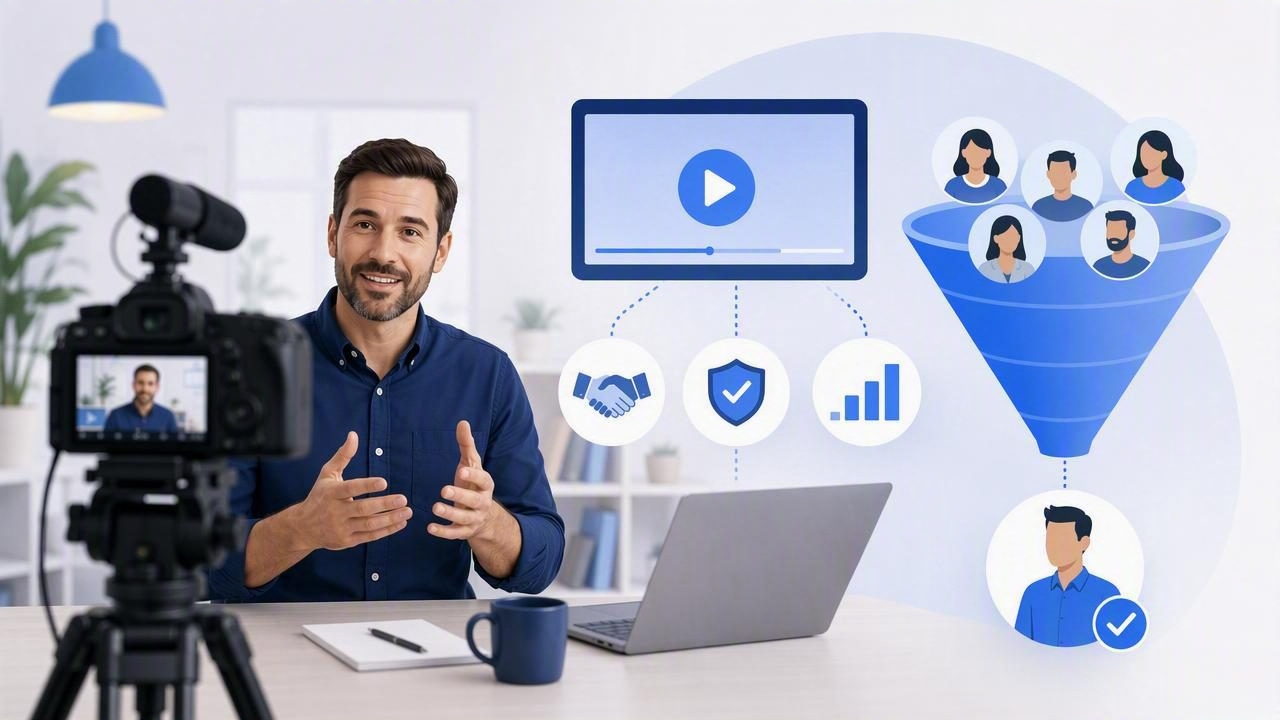
Learning how to produce service business videos is one of the most practical ways to make an intangible offer easier to understand, trust, and buy. Unlike physical products, services cannot always be held, tested, or photographed on a shelf. Prospective clients need to see the people, process, outcomes, and expertise behind your business before they feel confident enough to contact you.
Whether you run a consulting firm, salon, legal practice, fitness studio, home-services company, agency, clinic, or B2B software business, video marketing can shorten the distance between initial awareness and a sales conversation. A strong service video does not need a huge production budget. It needs a clear audience, a specific message, credible visuals, and a focused call to action.
This guide explains how to plan, film, edit, and distribute service business videos that support brand engagement and create measurable business results.
Why Service Businesses Need Video Marketing
Service buyers typically face more perceived risk than product buyers. They may wonder: Will this provider understand my problem? Can I trust the team? What will the process be like? Will the results justify the investment?
Video is uniquely effective because it combines visual storytelling with voice, movement, demonstrations, and social proof. It can show a technician arriving at a home, a consultant leading a workshop, a stylist performing a transformation, or a customer describing a positive experience. These moments make a service feel real.
- Build trust faster: Seeing real people helps humanize your brand.
- Explain complex offers: A short video can simplify processes that are difficult to communicate in text.
- Demonstrate outcomes: Before-and-after footage, walkthroughs, and client stories provide proof.
- Improve local visibility: Video content can strengthen your website, social media, business profile, and paid campaigns.
- Create reusable assets: One filming session can become clips, ads, testimonials, website sections, and email content.
Start With One Goal for Each Service Video
A common content creation mistake is trying to say everything in one video. Instead, decide what one action or belief the viewer should take away. The best goal depends on where the video fits in the buyer journey.
| Video Goal | Best Video Format | Primary Call to Action |
|---|---|---|
| Create awareness | Founder introduction or brand story | Follow, visit the website, or learn more |
| Educate prospects | FAQ, explainer, or process video | Watch another guide or book a consultation |
| Build credibility | Customer testimonial or case study | Request a quote or schedule a call |
| Generate leads | Offer-specific video ad | Claim an assessment, estimate, or trial |
| Support retention | Onboarding or how-to video | Complete the next step or contact support |
For example, an accounting firm could create a 45-second video explaining what documents a new business should prepare before tax season. That content addresses a real concern, demonstrates expertise, and naturally leads viewers toward booking a consultation.
Choose Service Video Types That Match Your Audience
When deciding how to produce service business videos, select formats based on customer questions rather than trends alone. Short vertical video may be ideal for discovery, while a longer case study can be more persuasive for high-consideration services.
1. Service Explainer Videos
An explainer answers what you do, who you help, how your process works, and why it matters. Keep the language conversational and avoid industry jargon. Use footage of the service in action, screen recordings, simple graphics, or customer-facing moments.
2. Customer Testimonial Videos
Testimonials are powerful because clients speak to the concerns that prospects already have. Ask customers to describe the problem they faced, why they chose your business, what the experience was like, and what changed afterward. Specific stories are more believable than vague praise.
3. Behind-the-Scenes Videos
Show preparation, team collaboration, quality checks, training, or your day-to-day workflow. Behind-the-scenes footage is especially useful for local and relationship-driven businesses because it reveals the care behind the final result.
4. FAQ Videos
Turn recurring sales and support questions into short videos. Topics could include pricing factors, timelines, what to expect at an appointment, how to prepare, or whether a service is right for a particular situation. These videos can reduce friction before a prospect contacts you.
5. Before-and-After or Results Videos
For home improvement, beauty, fitness, cleaning, design, and many professional services, visual proof is highly persuasive. Always obtain permission before filming customer locations or sharing identifiable results. Pair visuals with context so viewers understand the challenge and the work involved.
Build a Simple Video Plan Before You Film
Professional-looking service videos begin with planning, not expensive equipment. Create a brief for every video so the message stays focused and the filming process remains efficient.
- Define the viewer: Identify their role, problem, location, and level of awareness.
- Write one core message: State the main benefit in a single sentence.
- Choose proof: Include a demonstration, result, testimonial, credential, or process detail.
- Outline the visual story: List the shots needed to support the message.
- Set the CTA: Ask viewers to take one logical next step.
A useful service-video structure is: hook, problem, solution, proof, call to action. This framework works for organic social clips, website videos, and paid advertising.
Hook: "Choosing a contractor should not feel like a gamble."
Problem: "Many homeowners struggle with unclear timelines and surprise costs."
Solution: "Our process starts with a detailed project plan and transparent estimate."
Proof: "Here is how our team transformed this kitchen in six weeks."
CTA: "Request your no-obligation project consultation today."
Film Footage That Makes an Invisible Service Visible
Great visual storytelling helps prospects picture themselves working with you. Do not rely only on talking-head footage, even if an owner or expert is the main speaker. Capture supporting footage, often called B-roll, to add context, pace, and credibility.
Useful B-roll for service businesses includes:
- Team members greeting clients or preparing for appointments
- Close-ups of tools, materials, documents, software, or safety procedures
- Wide shots of your workspace, vehicle, office, studio, or job site
- Hands performing key steps in the service process
- Customer interactions, with written permission
- Finished work, results, or product photography supporting your service
Film in bright, uncluttered spaces whenever possible. Natural window light can work well, but avoid placing the speaker directly in front of a bright window. Prioritize clear audio: viewers are more likely to forgive imperfect lighting than muffled speech. A basic clip-on microphone is often one of the most worthwhile upgrades.
Edit for Attention, Clarity, and Accessibility
Editing should make your message easier to follow, not distract from it. Start by removing pauses, repeated phrases, and information that does not support the video goal. Place the most relevant statement early, particularly for social media video marketing where viewers decide quickly whether to continue watching.
Use captions on every short-form video. Many people watch with sound off, and captions also improve accessibility. Add text overlays to emphasize important facts, such as service areas, turnaround times, certifications, or a limited offer. Keep fonts readable and align colors with your existing brand identity.
A service video should answer the viewer's next question before they have to ask it.
For most platforms, create several versions from the same source footage. A 15- to 30-second vertical cut can work for social feeds and ads, while a 60- to 90-second version may suit a landing page. Longer videos are appropriate when the buying decision is complex and the viewer has already shown interest.
Optimize Videos for Search and Conversion
Producing the video is only part of the work. To improve discoverability, optimize every upload with language your customers actually use. Include your primary service, location when relevant, and customer problem in the title, description, captions, and surrounding webpage copy.
For instance, instead of titling a video “Our Team at Work,” use a descriptive title such as “How Our Austin HVAC Maintenance Service Prevents Summer Breakdowns.” This wording makes the content more useful to people and more understandable to search engines.
- Place a relevant video near the top of important service pages.
- Add a transcript or detailed summary below embedded videos.
- Use a custom thumbnail with a clear face, result, or benefit statement.
- Include one prominent CTA near the video.
- Link related videos together to keep interested visitors learning.
Measure What Is Working and Improve Your Next Video
Views alone do not tell you whether a service video is effective. Review performance against the goal you selected at the start. For awareness, track reach, watch time, and completion rate. For lead generation, examine clicks, form submissions, booked calls, and qualified inquiries.
If viewers leave early, test a stronger opening hook or shorten the introduction. If a video gets attention but few conversions, make the offer and call to action clearer. If testimonial content performs well, create more customer stories around distinct services and customer types.
Consistency matters more than perfection. Develop a repeatable filming day, capture a library of B-roll, and turn one customer interaction or project into multiple pieces of content. Tools that transform existing photos into motion-based creative can also help service brands extend the value of visual assets when new footage is limited. Platforms such as UGCMade can support this workflow by helping teams turn strong images into engaging video content.
Final Takeaway
Knowing how to produce service business videos comes down to showing evidence, not simply making claims. Focus each video on a customer problem, reveal the people and process behind your service, add credible proof, and guide viewers toward a simple next action. With a clear strategy and a repeatable content creation process, video can become one of your most valuable tools for trust, visibility, and brand engagement.