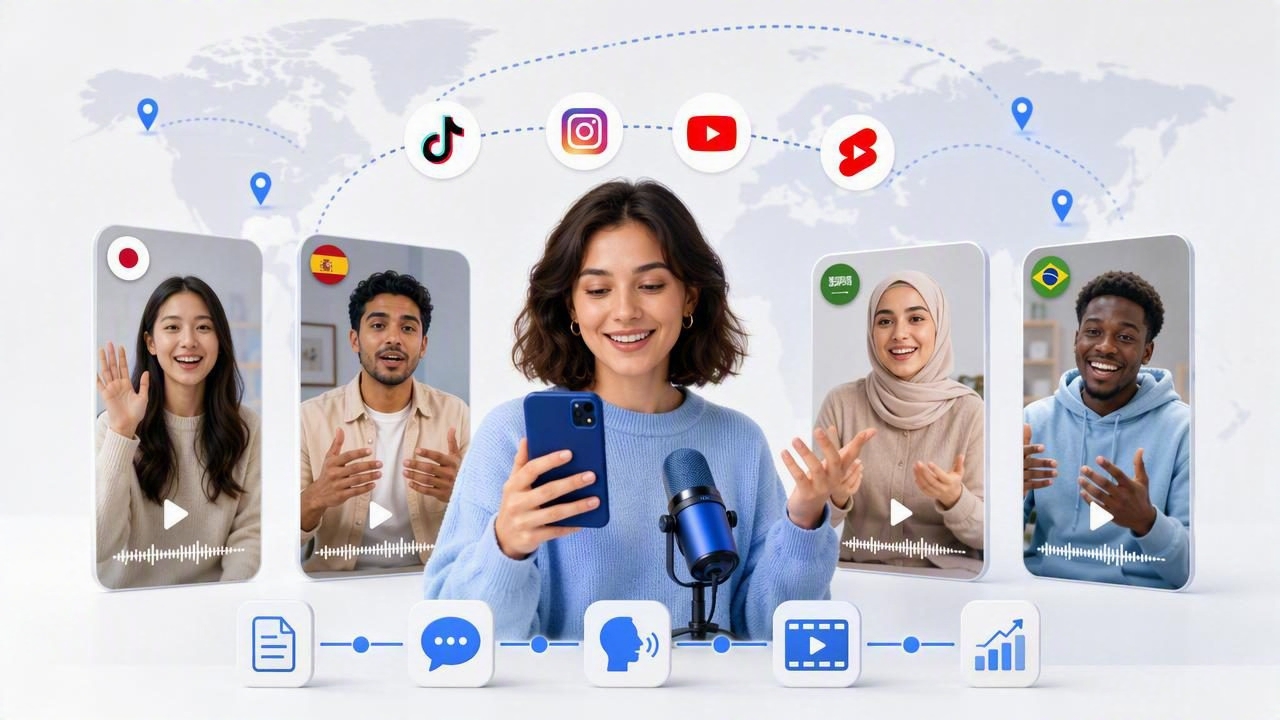
Modern brands need more than one strong video ad. They need a steady stream of platform-ready creative that speaks to different audiences, markets, and languages. A product video that performs on TikTok may need a different hook for Instagram Reels, a clearer product demonstration for YouTube Shorts, and a more direct call to action for paid social.
That challenge becomes even larger when a business sells internationally. Recreating video content manually for every language can be slow, expensive, and difficult to manage. A multilingual UGC generator can help marketing teams adapt a core concept into localized, user-generated-content-style videos without rebuilding every asset from scratch.
This guide explains how to make videos for multiple platforms with a multilingual UGC generator, including the creative workflow, localization standards, platform differences, and performance metrics that matter most.
Why Multi-Platform, Multilingual Video Content Matters
Short-form video has become a central part of product discovery. Consumers use social platforms to research products, compare options, watch tutorials, and look for proof from people who seem relatable. UGC-style content works particularly well because it can feel more conversational and less polished than a conventional commercial.
However, one generic video rarely fits every audience. A viewer in France may respond better to French voiceover, locally familiar language, and subtitles. A viewer in Mexico may need a Spanish variation that uses regional phrasing rather than a literal translation. Meanwhile, platform-native conventions affect how each video should be structured.
Creating localized video variations can help brands:
- Improve message relevance for audiences in different regions.
- Increase comprehension with native-language voiceover and captions.
- Adapt creative to platform-specific viewing behavior.
- Test more hooks, offers, and product benefits efficiently.
- Keep visual storytelling consistent across a broader campaign.
The objective is not simply to translate words. It is to retain the original marketing idea while making the video feel natural to the people watching it.
What Is a Multilingual UGC Generator?
A multilingual UGC generator is a video creation tool that helps turn product photos, product details, scripts, and creative inputs into UGC-style marketing videos in multiple languages. Depending on the tool, it may support AI presenters, voiceovers, captions, templates, scene generation, and aspect-ratio exports.
Instead of planning a separate production for every country, teams can start with a strong product message and create controlled variations. For example, a skincare brand may use the same product photography and benefit-led story while generating separate videos for English, German, Italian, and Spanish-speaking customers.
The best workflows balance automation with human review. Automation accelerates production, while local reviewers ensure that terminology, pronunciation, cultural references, and claims are appropriate for each market.
Start With a Reusable Video Concept
Scaling content starts before translation. First, create a clear video concept that can travel across platforms and languages. Product-focused UGC videos often perform well when they follow a simple structure:
- Hook: Capture attention in the first one to three seconds.
- Problem: Name a frustration, need, or desired outcome.
- Product reveal: Show the product early and clearly.
- Proof or demonstration: Explain how it works or why it is useful.
- Call to action: Tell viewers what to do next.
For example, a reusable water bottle brand might begin with: “I stopped buying bottled water after trying this.” The middle of the video can show the bottle’s lid, insulation, and portability. The localized versions can retain the same visual sequence while changing the narration, captions, opening line, and offer.
Tip: Build the central concept around a universal customer problem. Universal problems are easier to localize than jokes, slang-heavy scripts, or region-specific references.
Create a Source Asset Library Before Generating Videos
A reliable asset library makes video production faster and improves consistency. Gather high-quality product photography, lifestyle images, logo files, product specifications, approved claims, customer reviews, and brand guidelines before generating variations.
Product photography is especially important. Crisp photos with clear lighting, visible details, and uncluttered backgrounds are easier to animate and incorporate into product video scenes. Include multiple image types so your videos do not feel repetitive:
- Hero product images on clean backgrounds.
- Close-ups of key features and materials.
- In-use lifestyle photography.
- Packaging and unboxing visuals.
- Before-and-after imagery where compliant and relevant.
Also create a message sheet for each product. This document should list approved benefit statements, pronunciation notes, restricted claims, target customer segments, and preferred calls to action. It gives content creators a dependable source of truth as they produce videos at scale.
Localize Scripts Instead of Directly Translating Them
Direct translation can make a UGC-style video sound unnatural. The goal is localization: adapting the message so it feels fluent, persuasive, and culturally appropriate in the target language.
For every market, review the following elements:
| Element | What to Review | Why It Matters |
|---|---|---|
| Hook | Does the opening feel natural and attention-grabbing? | Early retention affects overall video performance. |
| Product terms | Are features and ingredients named correctly? | Accurate language builds trust and reduces confusion. |
| Currency and offers | Are prices, shipping details, and promotions market-specific? | Irrelevant offers can reduce conversion intent. |
| Calls to action | Does the CTA match local shopping behavior? | Different markets may prefer different next steps. |
| Compliance | Are product claims permitted in that region? | Advertising rules vary by category and country. |
Keep scripts concise. Short-form video viewers need simple language, one key promise, and a clear visual connection between the narration and what appears on screen. If a translated sentence becomes too long, rewrite it rather than forcing it into the original timing.
Adapt Videos for Each Platform
When you make videos for multiple platforms, do not treat export settings as the entire strategy. Format matters, but so do pacing, text placement, sound, and audience expectations.
TikTok
TikTok favors quick hooks, creator-like language, rapid pacing, and content that feels native to the feed. Open with a strong opinion, surprising result, or relatable problem. Keep branded elements subtle at the beginning, then make the product visible quickly.
Instagram Reels
Instagram Reels works well for aspirational product storytelling, routines, transformations, and visually polished demonstrations. Use large, readable captions and avoid placing essential text too close to the lower edge, where interface elements may obstruct it.
YouTube Shorts
YouTube Shorts can support direct educational angles, product comparisons, and concise how-to content. Search-friendly phrasing can be useful here, particularly when the video answers a specific question such as “How does this travel mug stay hot?”
Paid Social Placements
For paid placements, prioritize a clear value proposition, product visibility, and a call to action. Produce multiple openings because the first few seconds usually have the greatest impact on watch-through rate and cost efficiency.
Use a Practical Production Workflow
A structured workflow prevents multilingual content from becoming disorganized. The following process is suitable for ecommerce teams, agencies, and growing brands:
- Choose one product, audience, and campaign objective.
- Create three to five hook variations in the source language.
- Build short scripts around one primary benefit per video.
- Generate videos using consistent product photos and visual assets.
- Localize top-performing scripts for priority languages.
- Adjust voice, captions, offer details, and calls to action.
- Export platform-specific versions in the correct dimensions.
- Review every version for language quality, claims, and branding.
- Launch controlled tests and document the results.
For most vertical video placements, use a 9:16 aspect ratio and export at 1080 × 1920 pixels. Keep captions high enough to remain visible above platform buttons and descriptions. Ensure every important video can be understood without sound, since many people scroll with audio muted.
Test Variables Without Losing Creative Clarity
Localization creates many possible combinations, so test with intention. Changing everything at once makes it hard to know why a video won or lost. Start with one controlled variable, such as the opening hook, voice style, customer persona, or call to action.
A useful testing matrix might look like this:
- Hook: Problem-led versus result-led opening.
- Presenter style: Friendly peer, expert, or enthusiastic reviewer.
- Language: Localized voiceover versus subtitles only.
- Visual proof: Product close-up versus product-in-use scene.
- CTA: “Shop now” versus “See how it works.”
Begin with a smaller set of markets and identify patterns. If a problem-led hook outperforms in several countries, it may be a strong candidate for broader rollout. If one language version has weak completion rates, inspect the opening, pacing, voice quality, and caption readability before assuming the market is the issue.
Measure the Right Video Marketing Metrics
The most useful metrics depend on your goal. For awareness campaigns, focus on reach, three-second views, average watch time, and completion rate. For conversion-focused campaigns, monitor click-through rate, cost per click, add-to-cart rate, conversion rate, and return on ad spend.
Review performance by both platform and language. A creative that succeeds in one market may need a different benefit statement or voice approach elsewhere. Maintain a simple record of the best-performing hooks, scripts, product angles, and localized expressions so future content creation becomes more efficient.
Common Mistakes to Avoid
- Using literal translations without a native-language review.
- Reusing the same hook across platforms without adapting the pacing.
- Adding too much text to small mobile screens.
- Hiding the product until late in the video.
- Making unsupported health, performance, or sustainability claims.
- Generating too many variations before validating the core concept.
The strongest approach is repeatable rather than random: develop one good idea, create meaningful variations, measure results, and expand what works.
Build a Scalable Localized Video System
A multilingual UGC generator can help teams produce more relevant video content without multiplying production complexity. Start with strong product photography, a concise benefit-led script, and a clear platform strategy. Then localize thoughtfully, test systematically, and use performance data to guide your next creative round.
For brands looking to turn existing product visuals into dynamic, platform-ready content, tools such as UGCMade can support a more efficient visual storytelling workflow while keeping product messaging at the center.