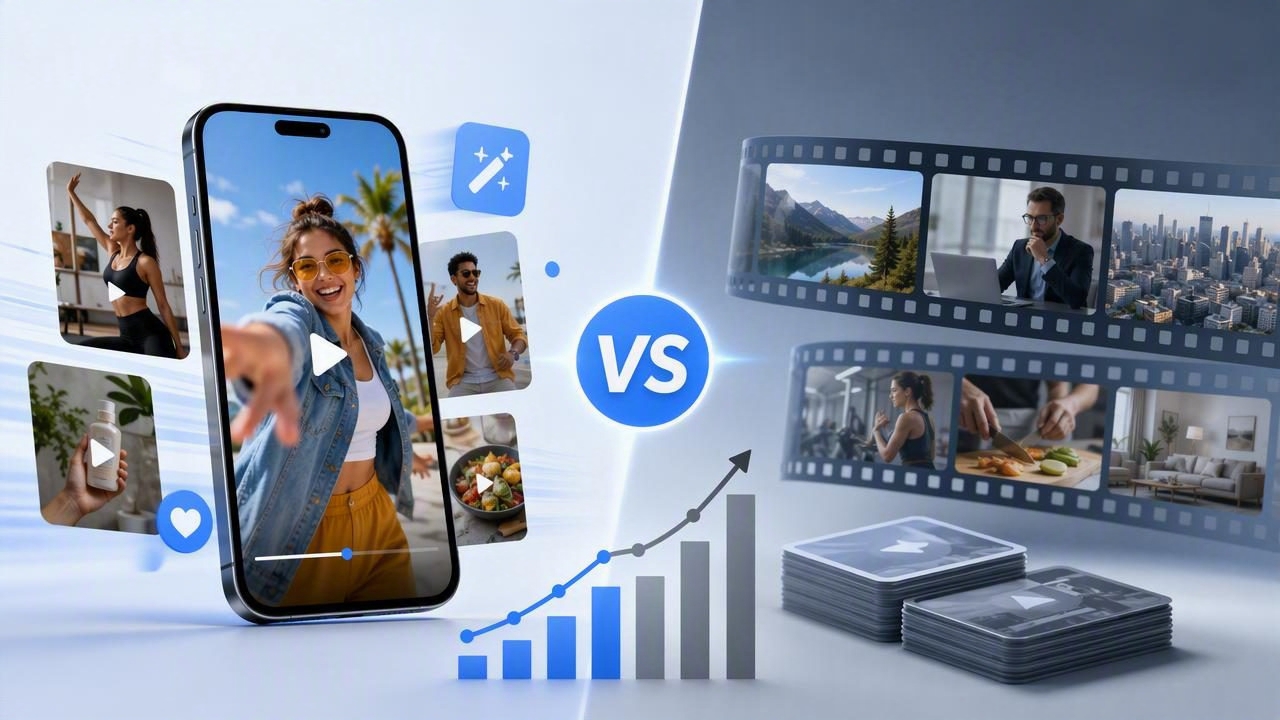
Brands need a steady flow of attention-grabbing video content to compete on platforms such as TikTok, Instagram Reels, YouTube Shorts, and paid social feeds. But creating enough creative assets can be difficult when budgets, production timelines, and internal resources are limited.
This often leads marketers to compare two practical approaches: using a short form ad generator or creating campaigns with stock video ads. Both can help teams produce videos without planning a large-scale shoot. However, they serve different goals, offer different levels of brand control, and can affect campaign performance in very different ways.
This guide explains the difference between a short form ad generator and stock video ads, when each option makes sense, and how to use both more effectively in your video marketing strategy.
What Is a Short Form Ad Generator?
A short form ad generator is a tool that helps marketers turn existing brand assets into short videos designed for social media advertising. Depending on the platform, inputs may include product photography, product descriptions, customer reviews, promotional offers, brand colors, logos, scripts, and calls to action.
The generator then helps arrange those assets into a concise video format. For example, a skincare brand could use product images, a benefit-led headline, a review quote, and a limited-time offer to create multiple 10- to 20-second ad variations.
Short-form video generators are especially useful for brands that need to produce content quickly while keeping the product at the center of the creative. They can support a more repeatable content creation workflow, particularly when a team wants to test multiple hooks, captions, pacing styles, or promotional messages.
What Are Stock Video Ads?
Stock video ads use pre-recorded footage licensed from a stock media library. The footage may show people working, traveling, cooking, exercising, shopping, or using generic products. Marketers combine these clips with text overlays, music, voiceovers, product screenshots, and branded end cards to create an ad.
Stock footage is popular because it gives teams access to polished scenes without arranging talent, locations, equipment, or production crews. A productivity app, for instance, may use stock footage of a busy professional at a desk to establish a workplace context before showing the app interface.
However, stock video is not created for one specific brand. Its usefulness depends on how well a marketer can connect generic footage to a unique product, audience, and message.
Short Form Ad Generator vs Stock Video Ads: Key Differences
| Factor | Short Form Ad Generator | Stock Video Ads |
|---|---|---|
| Primary source material | Brand-owned photos, product assets, copy, and reviews | Pre-existing licensed footage |
| Brand relevance | Usually high because the actual product is featured | Can vary depending on footage selection |
| Speed of iteration | Fast for creating multiple ad versions | Moderate; requires searching, licensing, and editing clips |
| Visual originality | Built around the brand's unique assets | May look familiar if widely used clips are selected |
| Best use case | Product-focused performance ads and creative testing | Atmosphere, storytelling context, and broad lifestyle concepts |
| Production control | High control over product, claims, messaging, and visuals | Less control over people, settings, and product interactions |
Why Product Relevance Often Matters More Than Polish
Stock footage can look highly polished, but polished visuals do not automatically make an ad persuasive. In many social placements, viewers quickly decide whether content feels relevant to their needs. If the visual opening does not connect clearly to the product or problem, the audience may scroll before seeing the offer.
A short form ad generator can make relevance easier to achieve because it begins with real product photography and product-specific messages. When a viewer sees the item, packaging, features, or before-and-after context right away, they can more quickly understand what is being promoted.
This does not mean every ad needs a literal product shot in the first second. Lifestyle framing can be useful. But the creative should establish a clear connection between the opening visual and the product benefit. Generic footage of someone smiling at a laptop may not communicate much about a project management tool unless the message and product demonstration follow immediately.
When Stock Video Ads Can Be the Better Choice
Stock footage still has a valuable place in visual storytelling. It can be the stronger choice when the campaign needs a scene that product photography alone cannot provide.
- Building an emotional setting: Travel, wellness, finance, or education brands may need a visual environment that establishes a mood.
- Explaining an abstract service: Businesses selling consulting, insurance, software, or professional services may use footage to represent a problem or outcome.
- Filling a production gap: A campaign may need an establishing shot, background sequence, or transition clip that has not been filmed in-house.
- Testing broad audience concepts: Stock clips can help a team explore different lifestyle angles before investing in original production.
The best stock video ads do not rely on generic footage alone. They use it as supporting material, then introduce distinctive brand elements early. This could include a product close-up, interface recording, customer quote, recognizable packaging, or branded visual treatment.
When a Short Form Ad Generator Is the Better Choice
A short form ad generator is generally a stronger fit when the campaign depends on product detail, speed, and repeatable testing. Ecommerce brands, subscription businesses, retailers, and consumer product companies often benefit because they already have a library of product photos and promotional messaging.
Use this approach when you need to:
- Create multiple ads from one product photography shoot.
- Show product colors, ingredients, textures, features, or packaging clearly.
- Turn reviews and testimonials into visual proof points.
- Adapt one offer for different audience segments or social placements.
- Refresh ads around sales, bundles, launches, or seasonal promotions.
- Test alternative hooks without rebuilding every video from scratch.
For performance marketing, this flexibility is important. Rather than asking, “Which one video should we make?” teams can ask, “Which message, hook, and product benefit should we test first?” That mindset supports more structured creative learning.
How Each Option Affects Brand Engagement
Brand engagement comes from recognition, relevance, and consistency. Stock footage can make a brand feel aspirational or cinematic, but it may struggle to create recognition if the footage could belong to any company. In contrast, product-led short videos can reinforce recognizable visual cues every time an ad appears in a feed.
For example, a beverage company might use stock footage of friends at a picnic. The visual may be attractive, but it does little for memory if the can is only visible in the final frame. A product-focused video could instead open with the drink being poured, show the flavor or ingredient benefit, include a customer reaction, and end with a direct offer. The second approach gives the viewer more reasons to connect the experience to the brand.
Effective short-form ads do not just earn attention; they make the product, promise, and next step easy to understand.
A Practical Hybrid Strategy
The decision does not always need to be either-or. A hybrid approach can combine the strengths of both formats. Use stock video to establish a scenario, then shift quickly to original product assets and a clear product demonstration.
For instance, a home organization brand could begin with a two-second stock clip of a cluttered kitchen. It could then transition to real product photography animated into a short sequence: the organizer in use, its dimensions, key benefit text, a customer rating, and a purchase-focused call to action.
This format creates context without losing the product relevance needed for conversion. It also helps avoid a common mistake: making an ad that looks good but does not adequately explain what is being sold.
How to Choose the Right Format for Your Campaign
Before selecting a production method, answer these questions:
- What must the audience understand in the first three seconds? If the answer is product-specific, prioritize product assets.
- Do you have strong product photography? High-quality images can be repurposed into many video variations.
- Is the campaign focused on emotion, explanation, or conversion? Emotion may benefit from stock context, while conversion often needs clearer product visibility.
- How many versions do you need? For frequent testing, a generator-based workflow is usually more efficient.
- Could a competitor use the same footage? If yes, add original visual elements before publishing.
- What platform is the ad for? Vertical, fast-paced placements usually reward concise messaging and immediate visual clarity.
Best Practices for Better Short-Form Video Ads
Whether you use stock footage, a short form ad generator, or both, these practices can improve the quality of your video marketing:
- Start with one clear hook. Lead with a problem, product outcome, bold question, or compelling visual.
- Keep text easy to scan. Use short phrases, large type, and enough contrast for mobile screens.
- Show the product early. Do not wait until the final seconds to reveal what the ad is about.
- Match visuals to the message. Every scene should support the claim, benefit, or action being communicated.
- Create variations deliberately. Test one variable at a time, such as the opening hook, offer, thumbnail, or call to action.
- Design for sound-off viewing. Captions and on-screen messaging should communicate the core idea without audio.
Final Takeaway
In the comparison of short form ad generator vs stock video ads, neither option wins in every situation. Stock video can provide useful atmosphere and storytelling context, while short-form ad generation makes it easier to create relevant, product-led assets at speed.
For brands focused on ecommerce performance, creative testing, and consistent product visibility, a generator-based workflow is often the more scalable foundation. Stock footage can then play a supporting role where it adds emotional context or fills a specific visual gap. Platforms such as UGCMade can help teams turn existing product photos into dynamic videos, making it easier to expand a practical, product-centered content creation workflow.