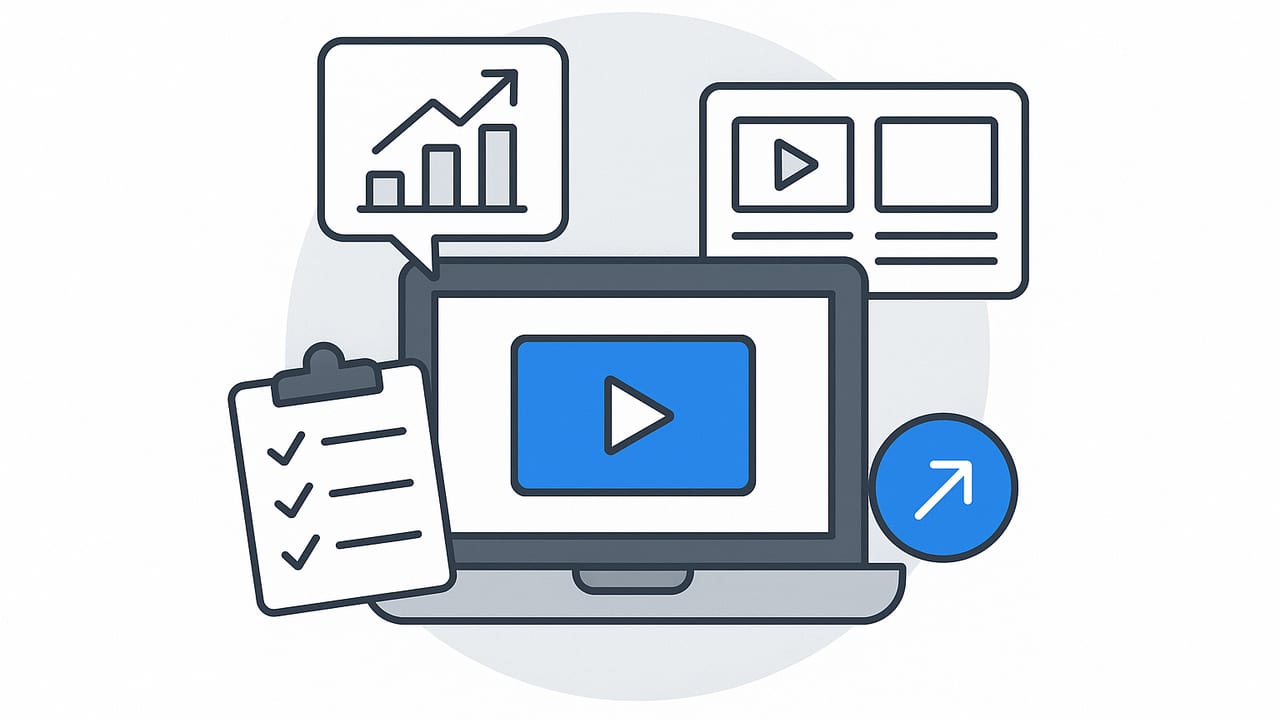
Product videos have moved from “nice-to-have” to “core” in modern commerce. Whether you’re launching a DTC brand, optimizing a marketplace listing, or scaling paid social, strong product videos condense value, proof, and personality into seconds. This guide breaks down how to plan, script, produce, distribute, and measure product videos so they actually drive outcomes—clicks, conversion, and retention—instead of just views.
Why Product Videos Drive Growth
Humans process visuals fast, but it’s story + proof that convinces. Product videos bring both together, showing the product in context while answering buyer objections. They can reduce ambiguity (what’s the size, texture, setup?), increase confidence (social proof, before/after), and communicate differentiation in a way static images struggle to match.
- Higher intent on product pages: Short, looping demos clarify use and benefits, reducing bounce.
- Better ad performance: Video formats unlock more audience signals (view time, replays, interactions) for smarter optimization.
- SEO and discoverability: Video snippets can increase SERP real estate and time-on-page, signaling relevance.
- Lower returns: Clear expectations reduce post-purchase confusion.
“Great product videos don’t just show features; they resolve doubts in the order a buyer naturally has them.”
Match Format to Funnel and Channel
Different buyers, different moments. Map your product videos to funnels and platforms to keep creative purposeful.
| Funnel Stage | Format | Aspect Ratio | Ideal Duration | Hook Type | Primary CTA |
|---|---|---|---|---|---|
| Awareness | UGC-style demo, founder story, motion graphic teaser | 9:16 | 6–15s | Pattern interrupt, bold claim | Learn more |
| Consideration | Comparison, problem/solution, how-it-works | 1:1 or 9:16 | 15–30s | Problem callout, benefit stack | See details |
| Decision | Unboxing, close-ups, testimonials, FAQs | 1:1, 16:9 for PDP | 20–45s | Objection handling | Add to cart |
| Post‑purchase | Setup/tutorial, care tips, upsell | 16:9, 1:1 | 30–60s | Quick wins | Watch guide |
Use 9:16 for Shorts/Reels/TikTok, 1:1 for feeds and some PDPs, and 16:9 for YouTube or embedded help content. For marketplaces, verify each product category’s video rules before production.
Script Frameworks That Convert
Winning product videos lead with a relevant hook, then move through value, proof, and a clear ask. Try these repeatable templates.
Hooks (first 1–3 seconds)
- Problem punch: “Tired of [pain]? Watch this.”
- Visual shock: Show unexpected before/after, then explain.
- Challenge: “I tested the top 3 and only one did this…”
- Speed demo: “Here’s how it works in 5 seconds.”
- Contrarian: “Stop buying X. Do this instead.”
Frameworks
- PAS (Problem–Agitate–Solution): State the pain, intensify consequences, reveal product as the fix.
- FAB (Features–Advantages–Benefits): Translate specs into outcomes the buyer feels.
- PSDP‑C (Problem–Solution–Demo–Proof–CTA): A concise blueprint for most product videos.
20‑Second Script Example (PSDP‑C)
Hook (0–3s): “Your pan sticks? Try this.” Close-up of egg sliding off.
Problem (3–6s): Sticky residue and burnt spots montage.
Solution (6–10s): Show product non-stick layer + heat distribution graphic.
Demo (10–15s): Fry egg, wipe clean. Split-screen vs. competitor.
Proof (15–18s): Overlay “5K+ 5-star reviews” and quick testimonial snippet.
CTA (18–20s): “Cook clean. Save time. Tap to get yours.”
Keep on-screen text readable at a glance; assume sound-off and add captions for sound-on delight.
Visual Building Blocks
- Hero angle: A crisp first look that instantly clarifies what the product is.
- Micro–macro sequence: Alternate tight detail shots with situational context to maintain attention.
- Motion cues: Gentle camera movement, speed ramps, and match cuts to keep pace lively.
- Text overlays: Put the benefit, not the feature, in large type.
- Proof layers: Ratings, certifications, media quotes, and short user quotes.
- Sound design: Snappy transitions; add tactile sounds for material-focused products.
- Brand anchors: Logo stings or color accents in the first and last frames—light touch only.
Specs and Ratios by Platform
Right format reduces crop issues and improves view completion. Start with vertical masters and adapt.
| Platform | Preferred Ratio | Typical Duration | Safe Zones | Notes |
|---|---|---|---|---|
| TikTok | 9:16 | 6–15s, up to 30s | Keep captions center; avoid bottom 15% | Native captions and sound matter |
| Instagram Reels | 9:16 | 6–30s | Avoid top/bottom 15% | Hook in 1s, bold text |
| YouTube Shorts | 9:16 | 10–60s | Right/left safe | Clear thumbnail frame optional |
| YouTube (long-form) | 16:9 | 45–120s | Lower-third safe | Use chapters for how-to |
| Product Detail Page (PDP) | 1:1 or 16:9 | 15–45s | Center title/subtitle | Auto-loop friendly |
| Amazon | 16:9 | 15–45s | Title safe all sides | No URLs or promos in frame |
SEO for Product Videos
Video SEO blends technical hygiene with relevance. Help search engines understand, index, and surface your clips.
- Placement: Embed near the top of the product description, above the fold whenever feasible.
- Copy support: Add a concise summary below the video and include a transcript for accessibility and keyword context.
- Schema markup: Use
VideoObjectwith key fields (name, description, thumbnailUrl, uploadDate, duration, contentUrl, embedUrl). - Thumbnails: High-contrast image with readable benefit text; avoid clutter.
- Sitemaps: Provide a video sitemap to help discovery.
- Internal links: Link from related blog posts and category pages to video-rich PDPs.
JSON‑LD Example for a Product Video
<script type="application/ld+json">
{
  "@context": "https://schema.org",
  "@type": "VideoObject",
  "name": "Non-Stick Pan Demo: Effortless Cleanup",
  "description": "See how our non-stick pan cooks and wipes clean in seconds. Real demo plus quick care tips.",
  "thumbnailUrl": [
    "https://www.example.com/images/pan-video-thumb.jpg"
  ],
  "uploadDate": "2023-08-12T08:00:00+00:00",
  "duration": "PT0M20S",
  "contentUrl": "https://www.example.com/videos/non-stick-pan.mp4",
  "embedUrl": "https://www.example.com/embed/non-stick-pan",
  "publisher": {
    "@type": "Organization",
    "name": "Example Brand",
    "logo": {
      "@type": "ImageObject",
      "url": "https://www.example.com/images/logo.png",
      "width": 600,
      "height": 60
    }
  }
}
</script>
Ensure the JSON‑LD matches the visible video, and the thumbnail is accessible and fast-loading. If you host videos on your own domain, serve them via a performant CDN and set appropriate caching headers.
Measurement and Optimization
Views alone won’t pay the bills. Define metrics aligned to funnel goals and test systematically.
- Thumb‑Stop Rate (TSR): Percentage of impressions that convert to 1+ second views. Higher TSR means your hook works.
- View‑Through Rate (VTR): Views that hit 95% or completed the video / total views. Diagnose pacing and clarity.
- Click‑Through Rate (CTR): Clicks / impressions. Reflects value clarity and CTA strength.
- Conversion Rate (CVR): Orders / sessions from the video. The ultimate signal for lower‑funnel creatives.
- Average Order Value (AOV): Revenue / orders. Useful for bundling/up-sell creatives.
- Blended ROAS or MER: Total revenue / total ad spend. Keeps channel silos honest.
Simple formulas:
TSR = 1s Views / Impressions
VTR = Completed Views / Views
CTR = Clicks / Impressions
CVR = Orders / Sessions
ROAS = Revenue Attributed / Ad Spend
Diagnose top-down: If TSR is low, fix the first 3 seconds. If TSR is fine but CTR is weak, sharpen benefits and CTA. If CTR is good but CVR lags, address objections and proof on the PDP or in the video itself.
A Practical Testing Roadmap
- Define the goal: Awareness (TSR/VTR) vs. acquisition (CTR/CVR/ROAS).
- Build a 3×3 matrix: Test 3 hooks × 3 CTAs with the same core demo to isolate effects.
- Vary one thing at a time: Keep music, captions, and offer constant when hook testing.
- Run small but fair samples: Aim for consistent audience segments and time windows; avoid mixing prospecting and retargeting in the same test.
- Iterate weekly: Roll forward winners; retire underperformers quickly.
Avoid “creative soup.” Label each asset with a clear naming convention: Product_Format_Hook_CTA_Length_Version.
Production Workflow That Scales
Pre‑Production
- Brief: Who is the viewer? What objection are we removing? What action should they take?
- Storyboard: Frame-by-frame with on-screen text and VO notes.
- Shot list: Angles, props, locations, and B‑roll coverage.
- Asset prep: Product in multiple conditions (new, in-use), packaging, accessories, lifestyle props.
Production
- Lighting: Soft, diffuse; consistent color temperature.
- Stability: Tripod or gimbal; lock exposure for match cuts.
- Multiple takes: Capture variations in speed and angle to give editors options.
Post‑Production
- Silent-first edit: Ensure story reads without sound; add captions.
- Proof overlays: Ratings, badges, and short UGC pull-quotes.
- Versioning: Cut 6s, 15s, and 30s variants; export in 9:16, 1:1, 16:9.
- QC checklist: Typos, safe zones, color accuracy, file naming.
Common Pitfalls to Avoid
- Feature dumping: Benefits and outcomes outperform spec lists in product videos.
- Weak first frame: Start with action, not a logo.
- Overlong cuts: Trim dead air; every second should earn attention.
- Illegible text: Check readability on small screens.
- Unclear CTA: Tell the viewer exactly what to do next.
Putting It All Together
Think of product videos as a modular system. Pair a tight hook with a relevant demo, layer in proof, and make the next step obvious. Align format to funnel and platform, do the technical SEO work so videos get discovered, and test small creative changes on a weekly cadence. The result is a compounding library of assets you can deploy across ads, PDPs, email, and support.
Need a faster way to turn existing product photos into on-brand clips? Some teams streamline this step with AI-powered tools like UGCMade, which transform stills into engaging product videos for testing across channels.